
Winter brings a familiar rise in coughs, colds, sore throats, blocked sinuses and other infections. Most improve with rest, fluids and sensible self-care, but symptoms can sometimes become more serious or require treatment. Pharmacy First offers a convenient way to obtain professional advice early, without waiting for a GP appointment.
Pharmacists are trained to assess symptoms, recommend suitable treatment and recognise when someone needs further medical attention. Depending on your symptoms, age and local arrangements, they may provide treatment through the NHS Pharmacy First service or advise you to contact your GP, NHS 111 or another healthcare professional.
What is Pharmacy First?
Pharmacy First enables participating pharmacies to assess and treat certain common conditions. In England, the NHS service covers seven conditions, including several that may be more frequent during the colder months:
- Sinusitis in people aged 12 and over
- Sore throat in people aged five and over
- Acute otitis media, or a middle-ear infection, in children aged one to 17
- Infected insect bites in people aged one and over
- Impetigo in people aged one and over
- Shingles in adults aged 18 and over
- Uncomplicated urinary tract infections in women aged 16 to 64
Eligibility, availability and the exact process may vary across the UK and between pharmacies. The service does not cover every cough, cold or flu symptom, but your pharmacist can still offer advice, recommend appropriate over-the-counter medicines where suitable and explain when to seek further care.
Why seek advice early in winter?
Many winter illnesses start with mild symptoms. A sore throat may be the beginning of a viral infection, while facial pain and congestion can develop into sinusitis. An ear infection may follow a cold, particularly in children. Seeking advice early can help you understand what to expect, choose safe symptom relief and avoid treatments that are unlikely to help.
Pharmacists can also check whether a medicine is appropriate alongside your regular prescriptions. This is especially important if you are pregnant or breastfeeding, have a long-term condition, take several medicines, or are seeking treatment for a young child or older person.
Antibiotics are not appropriate for most coughs and colds because these are usually caused by viruses. A pharmacist will consider your symptoms carefully and only recommend or supply an antibiotic when the condition and eligibility criteria indicate that it may be beneficial. Taking antibiotics when they are not needed can cause side effects and contributes to antibiotic resistance.
Winter symptoms a pharmacist can help you manage
Sore throats and coughs
A sore throat commonly accompanies a cold or other viral infection. Warm drinks, rest and appropriate pain relief may help. A pharmacist can advise on suitable lozenges, sprays or medicines, taking account of your age and medical history.
For a cough, the pharmacist can help distinguish between a typical short-term cough and symptoms that need assessment. You should seek prompt advice if a cough is worsening rapidly, lasts longer than expected, produces blood, or is accompanied by breathing difficulties, chest pain, confusion or a high temperature that does not settle.
Blocked nose, facial pain and sinus symptoms
Congestion and pressure around the cheeks, eyes or forehead can occur with a cold. Sinusitis may cause facial pain, a blocked or runny nose, reduced sense of smell and a high temperature. A pharmacist can advise on self-care and assess whether your symptoms could meet the criteria for Pharmacy First treatment.
Seek urgent medical help if swelling develops around the eyes, you experience changes to your vision, have a severe headache, become very unwell, or develop swelling of the forehead.
Earache in children
Earache can be distressing, particularly at night. A pharmacist can discuss age-appropriate pain relief and help determine whether the child may need assessment for an ear infection. Do not put cotton buds, oil or other objects into a child’s ear unless advised by a healthcare professional.
Arrange prompt medical assessment if a child is very drowsy, has swelling around or behind the ear, develops a stiff neck, has severe pain, or appears seriously unwell. Babies under three months with a temperature of 38°C or above require urgent medical advice.
When should you contact a pharmacist?
Consider contacting your pharmacy when symptoms are new but persistent, are affecting sleep or daily activities, or are not improving with sensible self-care. It is also sensible to seek advice if you are unsure whether a medicine is safe for you, if symptoms have returned after improving, or if an illness is affecting someone who may be more vulnerable.
Older adults, pregnant people, babies and young children, and those with conditions such as asthma, chronic obstructive pulmonary disease, diabetes or a weakened immune system may need individual advice sooner. A pharmacist can help you decide whether Pharmacy First is suitable or whether another service is more appropriate.
Symptoms requiring urgent or emergency help
Pharmacy First is not a replacement for emergency care. Call 999 or attend an emergency department if someone is struggling to breathe, has blue, grey or pale lips or skin, is unresponsive, has a suspected stroke, or is experiencing severe chest pain.
Contact NHS 111 or seek urgent medical advice for a rapidly worsening illness, severe dehydration, confusion, a persistent high temperature, a rash that does not fade when pressed, or symptoms in a person who is particularly vulnerable. If you are uncertain, explain the symptoms and their severity to a healthcare professional rather than waiting for them to worsen.
What happens during a Pharmacy First consultation?
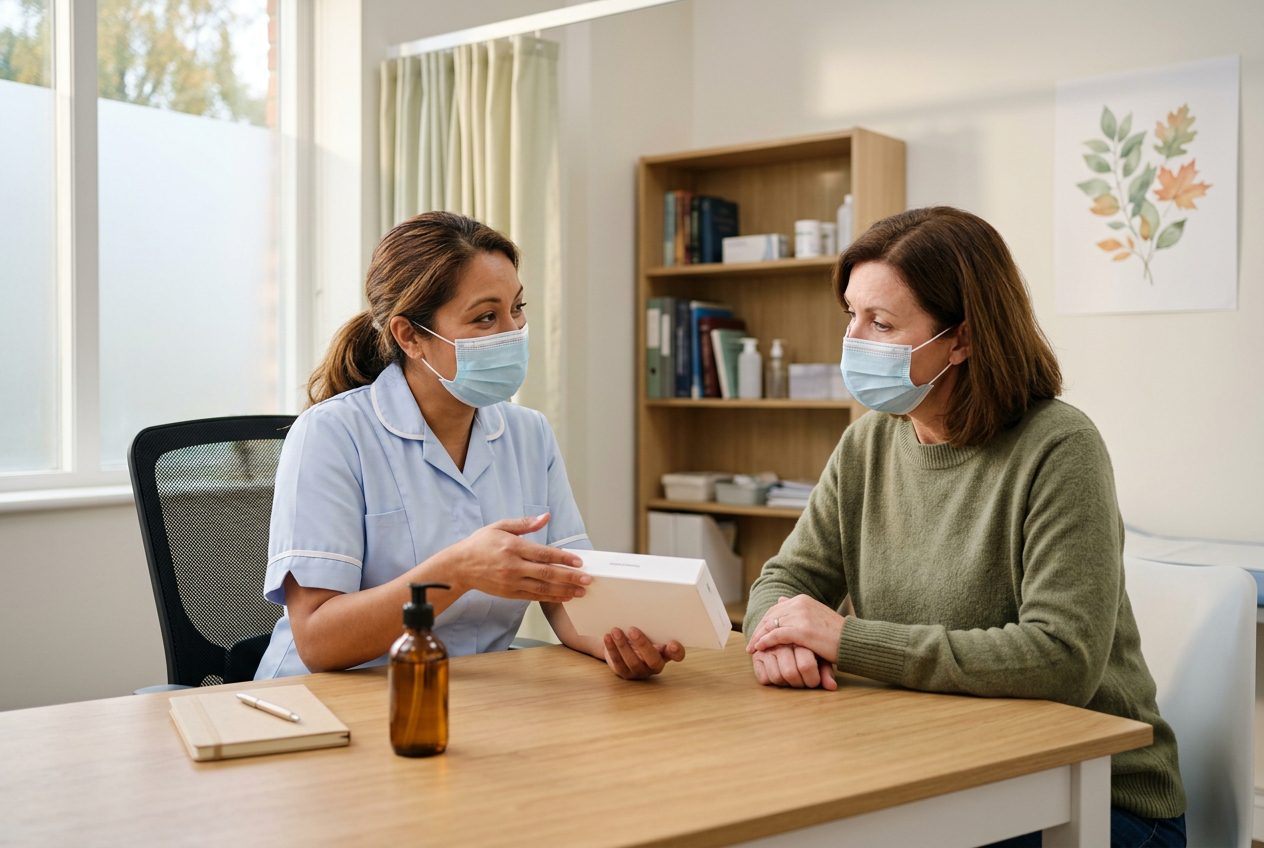
The pharmacist will ask about your symptoms, when they started, how they have changed and what medicines you use. They may check your temperature, examine your throat or ears where appropriate, and ask about allergies, pregnancy or long-term conditions.
You may receive self-care advice, a recommendation for an over-the-counter treatment, treatment supplied under the Pharmacy First service, or a referral to a GP, NHS 111 or another service. You should be given clear advice about what to do if symptoms do not improve. A consultation is private, and you can ask questions about any recommended medicine.
Prepare for your winter pharmacy visit
- Make a note of when the symptoms began and whether they are getting better or worse.
- Bring details of prescribed medicines, allergies and relevant medical conditions.
- For a child, know their age, weight if available, temperature and any medicines already given.
- Tell the pharmacist if you are pregnant, breastfeeding or immunocompromised.
- Follow the recommended dose and read the instructions before using any medicine.
Book Pharmacy First advice at Unicare Pharmacy
Early advice can make winter symptoms easier to manage and can help you recognise when further care is needed. Book your Pharmacy First service with Unicare Pharmacy to discuss your symptoms with a qualified pharmacist.