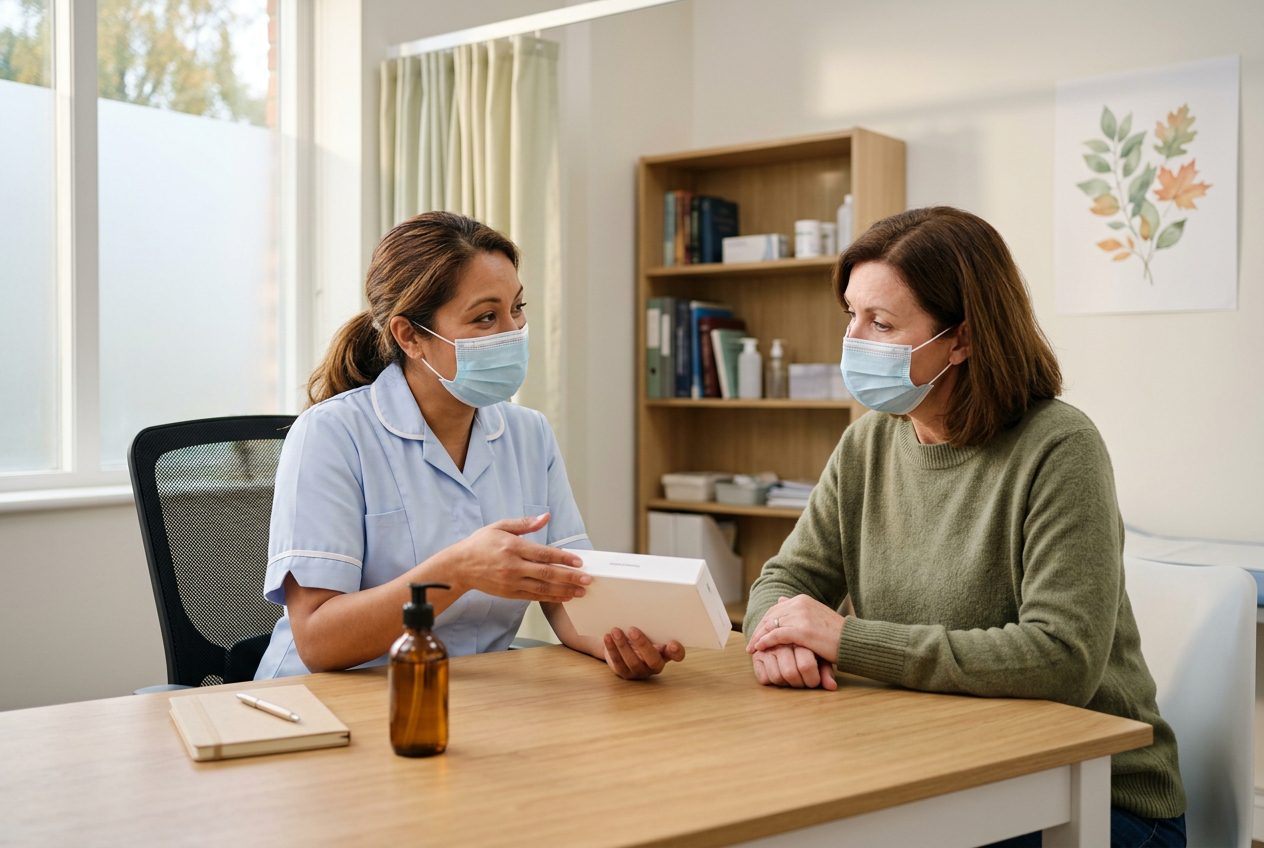

Pharmacy First provides convenient clinical advice and treatment for a range of common conditions. Instead of waiting for a GP appointment, eligible patients can speak with a trained pharmacist who can assess their symptoms, recommend self-care, and provide treatment where appropriate. In some situations, the pharmacist may supply prescription-only medicine under the service.
The service is available through participating community pharmacies in England. It is not intended to replace urgent or emergency care, and not every pharmacy offers every part of the service. Unicare Pharmacy can explain whether Pharmacy First is suitable for your symptoms and what options are available.
What conditions can Pharmacy First help with?
The NHS Pharmacy First service covers several common conditions. These include:
- sore throat
- sinusitis in people aged 12 years and over
- infected insect bites
- impetigo
- shingles in people aged 18 years and over
- uncomplicated urinary tract infections in women aged 16 to 64
The pharmacist will consider your age, symptoms, medical history and any medicines you take. The service is designed for straightforward cases where a pharmacist can safely assess and manage the condition. If your symptoms do not fit the service criteria, you can still receive advice about appropriate next steps, including whether you should contact your GP, NHS 111 or another healthcare professional.
What happens during a Pharmacy First consultation?
Your consultation will usually begin with questions about your symptoms. The pharmacist may ask when they started, whether they are getting worse, and how they affect you. They may also ask about fever, pain, swallowing, breathing, allergies, pregnancy, long-term conditions and medicines.
Depending on the condition, the pharmacist may examine the affected area or take a measurement such as your temperature. For a sore throat, they may ask about difficulty swallowing and whether you have noticed swollen glands or a rash. For sinus symptoms, they may ask about facial pain, nasal discharge, congestion and how long the symptoms have been present. For urinary symptoms, they will ask about burning or discomfort when passing urine, frequency, lower abdominal pain and any symptoms that could suggest a more serious infection.
The consultation is confidential. You should give complete and accurate information, including details of any medicines, supplements or allergies. This helps the pharmacist decide whether self-care, a pharmacy treatment, referral or further assessment is most appropriate.
Sore throats: what the pharmacist may advise
Most sore throats are caused by viral infections and improve without antibiotics. A pharmacist can recommend measures to ease discomfort, such as drinking plenty of fluids, resting, and using suitable pain relief if it is safe for you. Lozenges or throat sprays may also help some people.
Some sore throats may be caused by bacteria and may benefit from an antibiotic. The pharmacist will not provide antibiotics automatically. They will assess whether your symptoms meet the criteria for treatment and check that any medicine is suitable for you. Taking antibiotics when they are not needed can cause side effects and contributes to antibiotic resistance.
Seek urgent medical help if you have difficulty breathing, cannot swallow saliva, are drooling, have severe swelling in your mouth or throat, or feel seriously unwell. A sore throat accompanied by a widespread rash, severe dehydration or rapidly worsening symptoms also needs prompt medical advice.
Sinus symptoms: when Pharmacy First may help
Sinusitis can cause a blocked or runny nose, facial pain or pressure, reduced sense of smell, headache and thick nasal discharge. It often follows a cold and may improve with time. The pharmacist can discuss options such as rest, fluids, pain relief and measures to relieve nasal congestion, taking account of your health and any other medicines.
Antibiotics are not suitable for every episode of sinusitis. The pharmacist will consider the duration and severity of your symptoms and whether there are signs of a bacterial infection or a complication. They may recommend treatment, advise you to monitor your symptoms, or refer you for further assessment.
Get urgent advice if you develop swelling around the eye, changes to your vision, a severe headache, a stiff neck, confusion, or you become very unwell. You should also seek medical advice if symptoms are persistent, repeatedly returning or worsening despite self-care.
Uncomplicated infections and urinary symptoms
Pharmacy First can support the assessment of uncomplicated urinary tract infections for eligible women aged 16 to 64. Typical symptoms may include burning when passing urine, needing to urinate more often or urgently, and discomfort in the lower abdomen.
The pharmacist will ask questions to check whether the symptoms are likely to be a straightforward lower urinary infection and whether Pharmacy First is appropriate. They will also consider pregnancy, recent infections, allergies, kidney problems and other relevant medical history. Treatment may be offered when appropriate, or you may be referred to another service if the symptoms need further investigation.
Symptoms such as pain in the side or back, a high temperature, shivering, vomiting, blood in the urine, marked weakness or confusion may indicate a more serious infection. These symptoms require prompt medical attention. Pharmacy First may not be suitable for children, men, pregnant people or those with recurrent or complicated urinary symptoms, although the pharmacist can advise where to seek help.
Will I receive antibiotics?
There is no guarantee that an antibiotic will be needed or supplied. The pharmacist’s priority is to identify the safest and most effective treatment. This may involve self-care advice, an over-the-counter medicine, a prescription-only medicine supplied under the service, or referral to a GP or another healthcare professional.
If an antibiotic is supplied, take it exactly as directed and complete the course unless a healthcare professional tells you otherwise. Ask the pharmacist what to do if you develop side effects or do not improve. Do not share antibiotics with anyone else or use leftover medicine from a previous illness.
How to prepare for your appointment
- Make a note of when your symptoms began and whether they are improving or worsening.
- Bring or list all medicines, vitamins and supplements you take.
- Tell the pharmacist about allergies, pregnancy or breastfeeding, and long-term health conditions.
- Bring your NHS number or other requested details if you have them.
- Be ready to describe any previous treatment and whether it helped.
If you are unsure whether your symptoms are suitable, contact the pharmacy before attending. The pharmacist can explain the service, eligibility requirements and whether an appointment is needed. NHS Pharmacy First eligibility and availability may vary, and private consultation arrangements may also be available where appropriate.
Book your Pharmacy First consultation
For convenient advice about a sore throat, sinus symptoms or a possible uncomplicated infection, book your Pharmacy First service with Unicare Pharmacy. If you have severe or rapidly worsening symptoms, seek urgent medical help rather than waiting for a routine pharmacy appointment.